Nissan Sentra B18 (2020-2025) Owner's Manual: Blind Spot Warning (BSW)
WARNING
Failure to follow the warnings and instructions for proper use of the Blind Spot Warning (BSW) system in the Nissan Sentra could result in serious injury or death.
- The BSW system is a driver assistance feature only and is not a substitute for proper driving procedures. It is not designed to prevent contact with vehicles or objects. When changing lanes in the Nissan Sentra, always use the side and rearview mirrors and physically turn your head to check the direction in which the vehicle will move. Never rely solely on the BSW system when performing lane changes.
The Blind Spot Warning system in the Nissan Sentra helps alert the driver to the presence of other vehicles traveling in adjacent lanes, particularly in areas that may be difficult to see using mirrors alone.
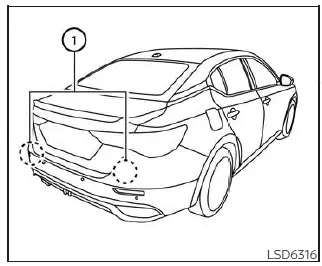
The BSW system uses radar sensors (1) installed near the rear bumper of the Nissan Sentra to detect vehicles approaching or traveling within adjacent lanes.
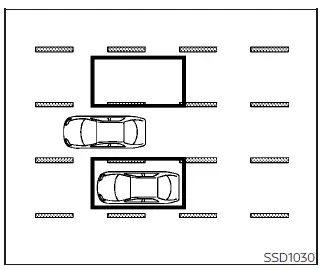
Detection zone
The radar sensors can detect vehicles on either side of the Nissan Sentra within the illustrated detection zone. This zone begins near the outside mirrors and extends approximately 10 ft (3.0 m) behind the rear bumper, as well as approximately 10 ft (3.0 m) outward to each side.
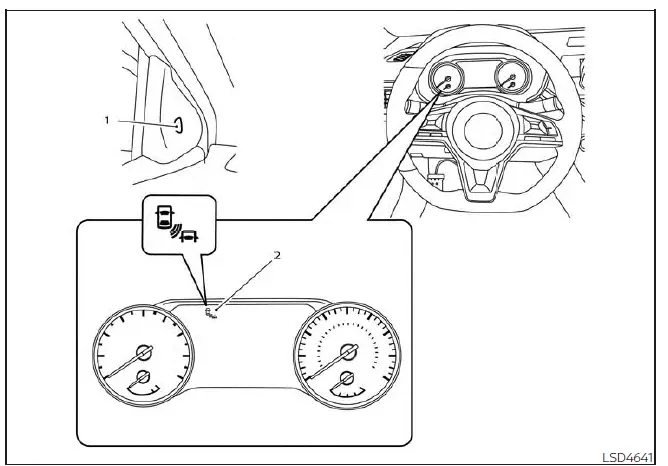
For vehicles with the 7 inch meter display
- Side BSW/RCTA indicator light
- BSW/RCTA indicator on the meter display
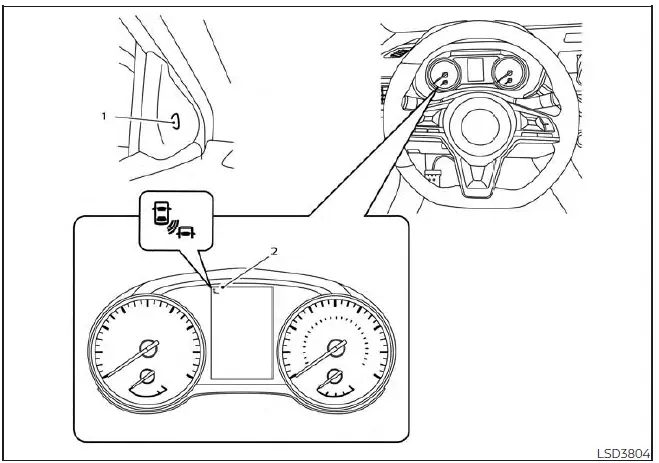
For vehicles with the 4.2 inch meter display
BSW system operation
The Blind Spot Warning system on the Nissan Sentra operates when the vehicle speed exceeds approximately 20 mph (32 km/h).
If the radar sensors detect a vehicle within the detection zone, the side BSW/RCTA indicator light (1) illuminates. When the driver activates the turn signal toward the detected side, the system emits an audible chime (two beeps) and the side BSW/RCTA indicator light flashes. The indicator continues flashing until the detected vehicle exits the detection zone.
The side BSW/RCTA indicator light illuminates briefly when the ignition switch of the Nissan Sentra is turned to the ON position, indicating a system check.
The brightness of the side BSW/RCTA indicator light automatically adjusts based on surrounding ambient light conditions to maintain optimal visibility.
If another vehicle enters the detection zone after the turn signal has already been activated, only the side BSW/RCTA indicator light will flash and no audible chime will sound.
How to enable/disable the BSW system
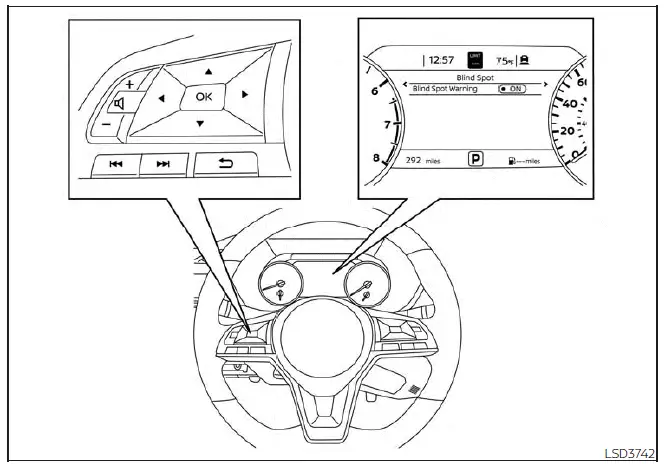
For vehicles with the 7 inch meter display
Follow the steps below to enable or disable the Blind Spot Warning (BSW) system on your Nissan Sentra.
1. Press the
 button repeatedly until "Settings" appears in the vehicle information display.
Use the
 button to select "Driver Assistance," then press the OK button.
2. Select "Blind Spot" and press the OK button.
3. Select "Blind Spot Warning" (if equipped) or "Blind Spot (BSW)" (if equipped), then press the OK button to turn the system on or off.
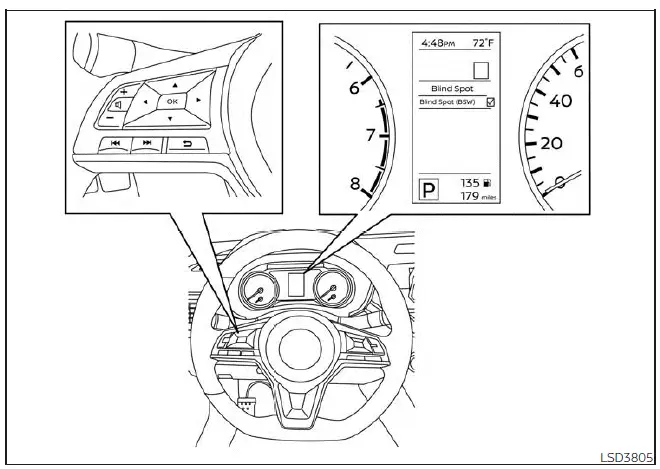
For vehicles with the 4.2 inch meter display
BSW system limitations
WARNING
The Blind Spot Warning system has operational limitations and may not detect all vehicles in every driving situation. Road conditions, vehicle speed differences, weather, and sensor obstruction can affect system performance. Always use safe driving practices and remain attentive when operating the Nissan Sentra.
Listed below are the operating limitations of the Blind Spot Warning (BSW) system. Failure to operate the Nissan Sentra in accordance with these system limitations may result in serious injury or death.
- The BSW system cannot detect all vehicles in every driving situation or under all environmental conditions.
- The radar sensors may be unable to detect and activate the BSW system
when certain objects or scenarios are present, including:
- Pedestrians, bicycles, or animals near the vehicle.
- Vehicles such as motorcycles, very low-profile vehicles, or vehicles with high ground clearance.
- Oncoming vehicles traveling in the opposite direction.
- Vehicles that remain within the detection zone while the Nissan Sentra accelerates from a complete stop.
- A vehicle merging into an adjacent lane at approximately the same speed as your Nissan Sentra.
- A vehicle approaching rapidly from behind.
- A vehicle that your Nissan Sentra overtakes quickly.
- A vehicle that passes through the detection zone in a very short period of time.
- When overtaking multiple vehicles consecutively, vehicles following closely behind the first may not be detected.
- The radar sensors are calibrated for standard lane widths. When driving in wider lanes, vehicles in adjacent lanes may not be detected. Conversely, when driving in narrow lanes, the sensors may detect vehicles traveling two lanes away.
- The radar sensors are designed to ignore most stationary objects; however, objects such as guardrails, walls, roadside vegetation, or parked vehicles may occasionally be detected. This behavior is considered normal system operation.
- The following conditions may reduce the radar sensors’ ability to detect
other vehicles:
- Severe weather conditions.
- Road spray from surrounding traffic.
- Ice, frost, snow, or dirt buildup on the rear of the Nissan Sentra.
- Do not attach stickers (including transparent materials), install accessories, or apply additional paint near the radar sensor areas. These actions may interfere with radar operation and reduce detection performance.
- Excessive interior or exterior noise, such as high audio system volume or open windows, may interfere with the audible chime and prevent it from being heard.
BSW driving situations
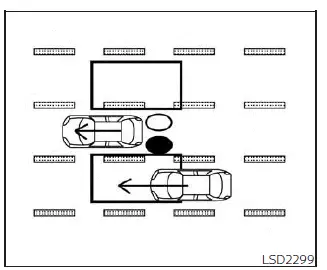
Illustration 1 - Approaching from behind
Indicator on

Indicator off

Indicator flashing

Another vehicle approaching from behind
Illustration 1: The side BSW/RCTA indicator light illuminates when a vehicle enters the detection zone from behind in an adjacent lane of the Nissan Sentra.
NOTE:
- The radar sensors may not detect vehicles that are approaching very rapidly from behind.
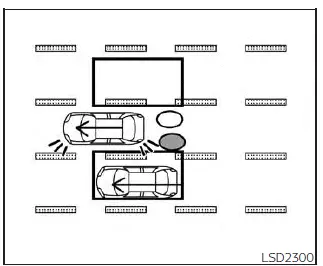
Illustration 2 - Approaching from behind
Illustration 2: When the driver activates the turn signal while another vehicle is within the detection zone, the Nissan Sentra BSW system emits two chimes and the side BSW/RCTA indicator light flashes.
NOTE:
- The radar sensors may not detect vehicles that are approaching rapidly from behind.
- If the turn signal is activated before a vehicle enters the detection zone, the indicator light will flash, but no audible chime will sound once the vehicle is detected.
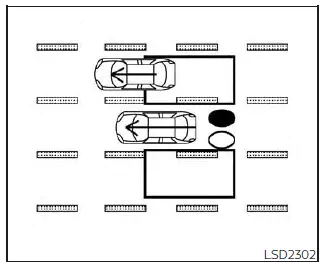
Illustration 3 - Overtaking another vehicle
Overtaking another vehicle
Illustration 3: The side BSW/RCTA indicator light illuminates when the Nissan Sentra overtakes another vehicle and that vehicle remains within the detection zone for approximately two seconds.
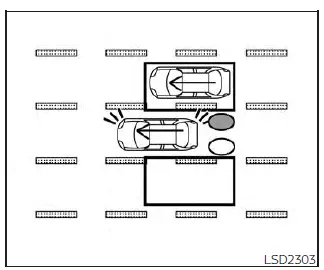
Illustration 4 - Overtaking another vehicle
Illustration 4: If the driver activates the turn signal while overtaking another vehicle that is within the detection zone, the system sounds two chimes and the side BSW/RCTA indicator light flashes.
NOTE:
- When overtaking multiple vehicles in succession, vehicles following closely behind the first may not be detected.
- The radar sensors may not detect slower-moving vehicles if they are passed quickly.
- If the turn signal is activated before a vehicle enters the detection zone, the indicator light will flash without an audible chime when the vehicle is later detected.
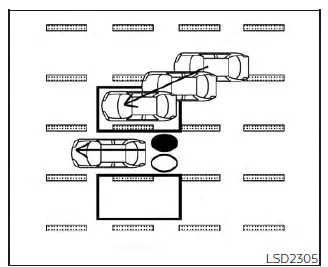
Illustration 5 - Entering from the side
Entering from the side
Illustration 5: The side BSW/RCTA indicator light illuminates when another vehicle enters the detection zone from either side of the Nissan Sentra, alerting the driver to a potential blind spot condition.
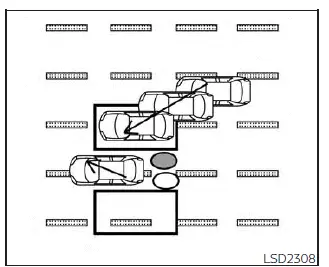
Illustration 6 - Entering from the side
Illustration 6: When the driver of the Nissan Sentra activates the turn signal while another vehicle is already within the detection zone, the Blind Spot Warning system emits two audible chimes and the side BSW/RCTA indicator light flashes to warn of a possible unsafe lane change.
NOTE:
- If the turn signal is activated before a vehicle enters the detection zone, the side BSW/RCTA indicator light will flash, but no audible chime will sound once the vehicle is detected.
- The radar sensors may not detect a vehicle that is traveling at approximately the same speed as the Nissan Sentra when it enters the detection zone.
System temporarily unavailable
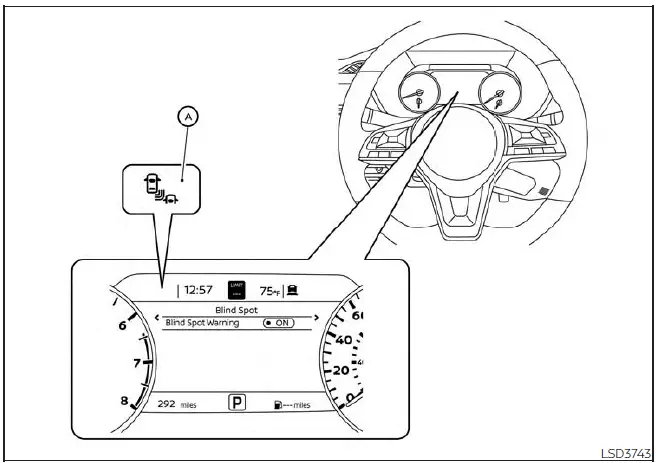
For vehicles with the 7 inch meter display
When side radar blockage is detected, the Blind Spot Warning system on the Nissan Sentra will deactivate automatically. A warning message such as "Side Radar Obstruction" or "Unavailable: Side Radar Obstruction" will appear, and the BSW/RCTA indicator (white) will blink (A) in the vehicle information display.
The system will remain unavailable until the obstructing conditions are resolved.
The radar sensors may be temporarily blocked by ambient conditions such as splashing water, mist, or fog. Blockage may also occur due to ice, frost, or dirt accumulating on or near the radar sensor surfaces.
NOTE:
If the BSW system becomes unavailable, the Rear Cross Traffic Alert (RCTA) system will also be disabled.
Action to take:
Once the obstructing conditions no longer exist, the BSW system on the Nissan Sentra will resume normal operation automatically.
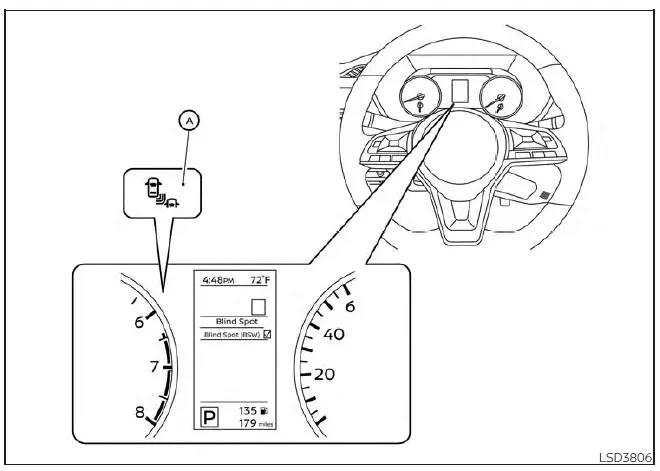
For vehicles with the 4.2 inch meter display
Malfunction
If the Blind Spot Warning system malfunctions, it will automatically turn off. A system malfunction warning message along with the BSW/RCTA indicator (orange), if equipped, will appear in the vehicle information display of the Nissan Sentra.
NOTE:
If the BSW system stops operating due to a malfunction, the RCTA system will also stop operating.
Action to take:
Safely stop the Nissan Sentra, turn the engine off, and restart it. If the warning message continues to appear, have the system inspected. It is recommended that you visit an authorized NISSAN dealer for diagnosis and service.
System maintenance
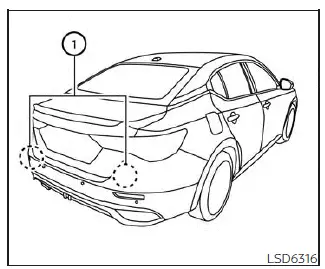
The two radar sensors (1) used by the BSW and RCTA systems on the Nissan Sentra are located near the rear bumper. To ensure proper operation, always keep the area around the radar sensors clean and unobstructed.
The radar sensors may be temporarily blocked by environmental conditions such as splashing water, mist, or fog.
Blockage may also occur due to ice, frost, or dirt accumulating on or around the radar sensor surfaces.
Inspect the rear bumper area regularly and remove any objects or contaminants that may obstruct the radar sensors.
Do not attach stickers (including transparent materials), install accessories, or apply additional paint near the radar sensor locations, as this may interfere with radar performance.
Do not strike or damage the area around the radar sensors. If the rear bumper or sensor area is damaged due to a collision, it is recommended that the Nissan Sentra be inspected by an authorized NISSAN dealer.
Radio frequency statement (Type A) (if so equipped)
For USA
This device complies with Part 15 of the FCC Rules. Operation is subject to the following two conditions:
(1) This device may not cause harmful interference, and (2) this device must accept any interference received, including interference that may cause undesired operation.
FCC Warning
Changes or modifications not expressly approved by the party responsible for compliance could void the user's authority to operate the equipment.
For Canada
This device complies with Industry Canada licence-exempt RSS standard(s).
Operation is subject to the following two conditions: (1) this device may not cause interference, and (2) this device must accept any interference, including interference that may cause undesired operation of the device.
Frequency bands: 24.05 GHz – 24.25 GHz
Output power: less than 20 milliwatts
Radio frequency statement (Type B) (if so equipped)
For USA
This device installed in the Nissan Sentra complies with Part 15 of the FCC Rules. Operation is subject to the following two conditions:
(1) This device may not cause harmful interference, and (2) this device must accept any interference received, including interference that may cause undesired operation.
FCC Warning
Any changes or modifications not expressly approved by the party responsible for compliance may void the user’s authority to operate this equipment installed in the Nissan Sentra.
For Canada
This device contains licence-exempt transmitter(s) and receiver(s) that comply with Innovation, Science and Economic Development Canada’s licence-exempt RSS standards. Operation is subject to the following two conditions:
1. This device may not cause interference.
2. This device must accept any interference received, including interference that may cause undesired operation of the device.
Radio frequency radiation exposure information:
This equipment installed in the Nissan Sentra complies with radiation exposure limits set forth for an uncontrolled environment. The equipment should be installed and operated with a minimum separation distance of 20 cm between the radiator and the human body to ensure safe operation.
Other materials:
C161a-83 Abs System
Dtc Description
DTC Description
DTC DETECTION LOGIC
DTC No.
CONSULT screen terms
(Trouble diagnosis content)
DTC detection condition
...
B2f06-15 Back Door/trunk Opener Switch
Dtc Description
DTC Description
DTC DETECTION LOGIC
DTC No.
CONSULT screen items (Trouble
diagnosis content)
DTC detecting condition
...
Fuel Level Sensor Signal Circuit
Component Function Check
Component Function
Check
COMBINATION METER INPUT SIGNAL
CONSULT
Select “FUEL METER� in “Data Monitor� mode of “METER/M&A�.
Compare the ...